
Understand the result · 4 min read
Interpreting AI scores
Start with the overall result, then look at the passages behind it. A useful review goes beyond the percentage.
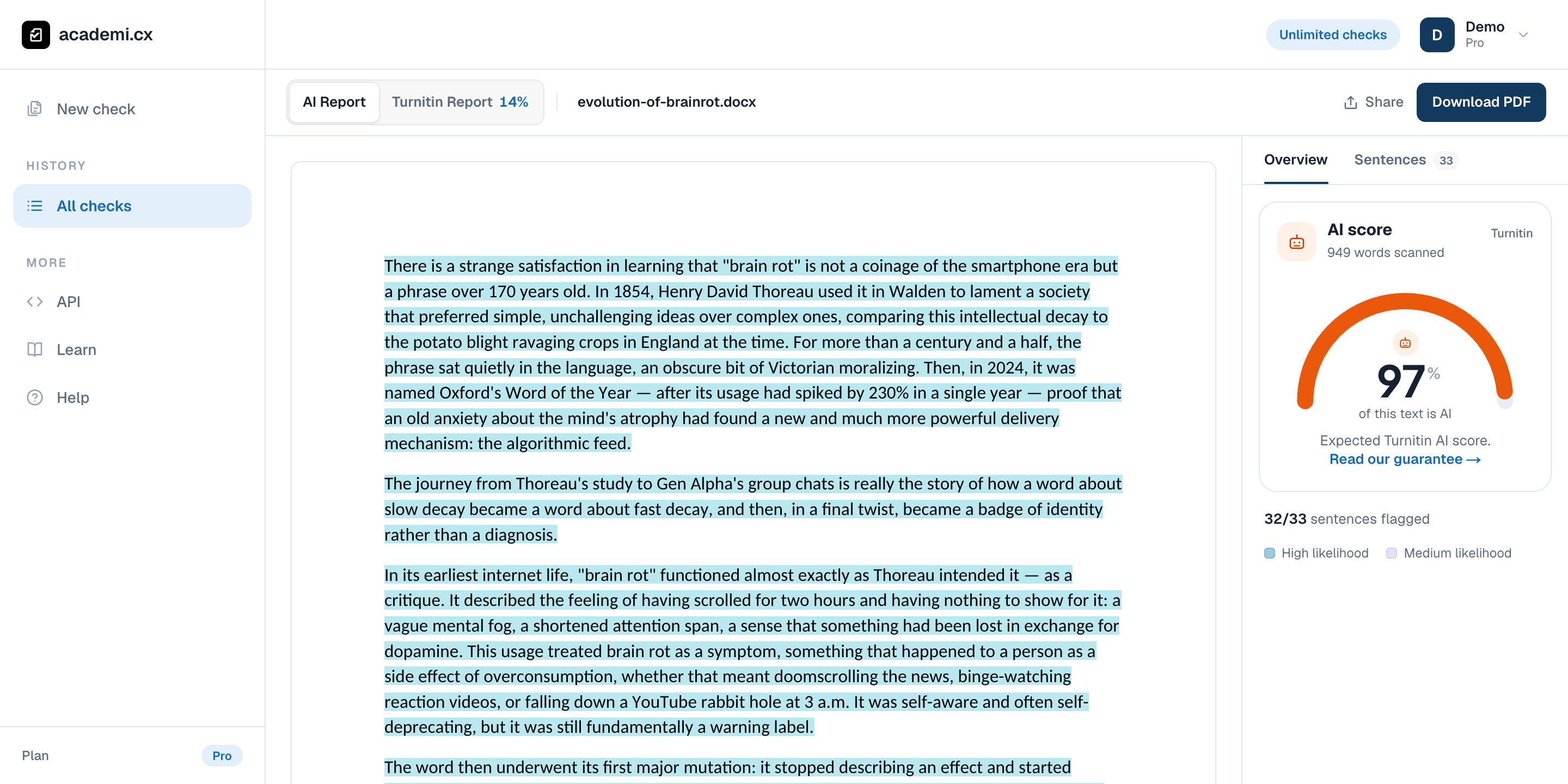
The overall percentage previews your expected Turnitin AI result. This demo scored 97%; it is an estimate about the text, not a verdict about its author.
Start with the overall score
The headline summarizes how much of the writing the detector expects to be identified as AI. It is an estimate about the document, not the probability that its author used AI. A 40% result does not mean a 40% chance of misconduct.
Use that number to orient yourself, then read the highlighted passages. Two documents with similar overall scores can contain very different patterns: one long flagged section, for example, or shorter passages throughout the draft.
Read highlighted and unhighlighted text together
In the demo, some sentences are highlighted and others are left clear. Read across that boundary instead of treating each line as a separate verdict. Neighboring sentences give the model context and can help you understand the passage too.
- Cyan highlights show stronger AI signals.
- Light purple shows a weaker signal when that category appears in the report.
- Unhighlighted text is below the highlight threshold or excluded from analysis. It is not a guarantee of human authorship.
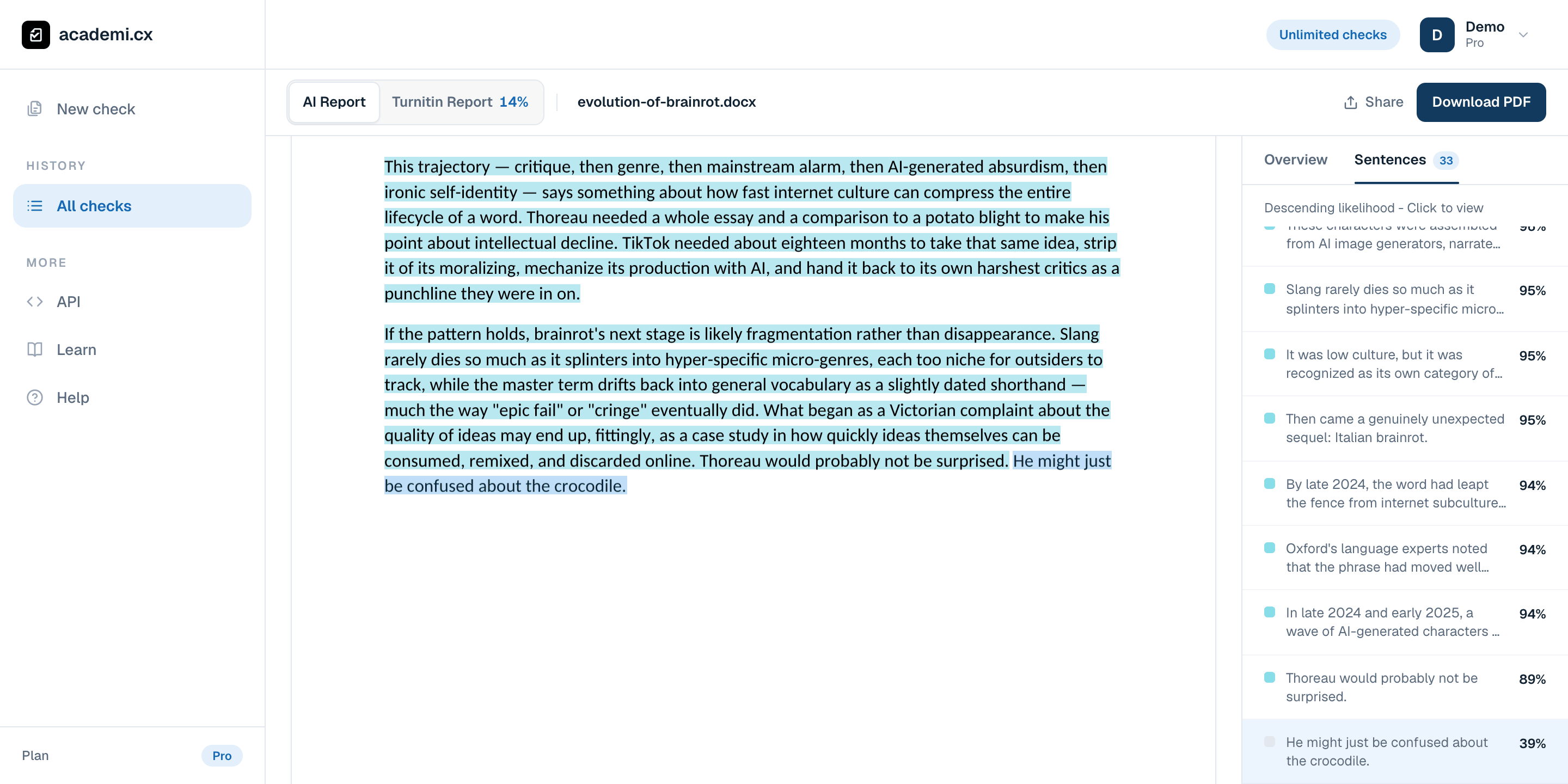
The unlocked sentence list puts stronger AI signals first. These numbers help you decide where to look; averaging them does not reproduce the overall score.
Use sentence scores to find where to look
Open Sentences to inspect individual passages. When unlocked, the list puts the strongest signals first; select a row to jump to that part of the document.
Put the result in context
Document length affects how closely the overall result matches Turnitin. In our testing, longer documents generally gave closer results, while very short and very long documents showed more discrepancies. In a short document, a disagreement about just one sentence can account for a substantial share of the total percentage.
A short excerpt may leave out clues that are visible in a complete paragraph. Edits can also change how nearby sentences are assessed. When comparing results, use the same document version and format, and keep the full passage around the sentence you are reviewing.